The Process of EMDR Therapy: a Comprehensive Overview to Its Techniques and Advantages
EMDR therapy attracts attention as an organized approach for attending to traumatic memories. Its multi-phase approach and incorporation of reciprocal excitement techniques established it besides traditional therapies. By promoting the reprocessing of traumatic experiences, EMDR provides an unique pathway to recovery. What particular methods are used, and what advantages do they offer injury recuperation? Discovering these facets exposes a much deeper understanding of this effective healing choice.
Recognizing EMDR Treatment: A Summary
EMDR treatment, or Eye Activity Desensitization and Reprocessing, is a psychotherapy approach developed to relieve the distress linked with terrible memories. Established by Francine Shapiro in the late 1980s, EMDR incorporates elements from numerous therapeutic modalities, consisting of cognitive-behavioral therapy and psychodynamic treatment. The key goal of EMDR is to assist people process and reframe terrible memories, decreasing their psychological cost and associated signs.
During EMDR sessions, clients involve in dual focus stimulations, typically including directed eye activities, while remembering distressing memories - licensed emdr therapists nyc. This process permits the mind to recycle the memory in a much healthier way. EMDR has acquired recognition for its effectiveness in treating PTSD, depression, and anxiety, amongst other conditions. Study has shown that EMDR can result in substantial improvements in psychological well-being. As an organized intervention, it offers a complete framework for therapists to aid customers in conquering the impact of past injuries
The 8 Stages of EMDR
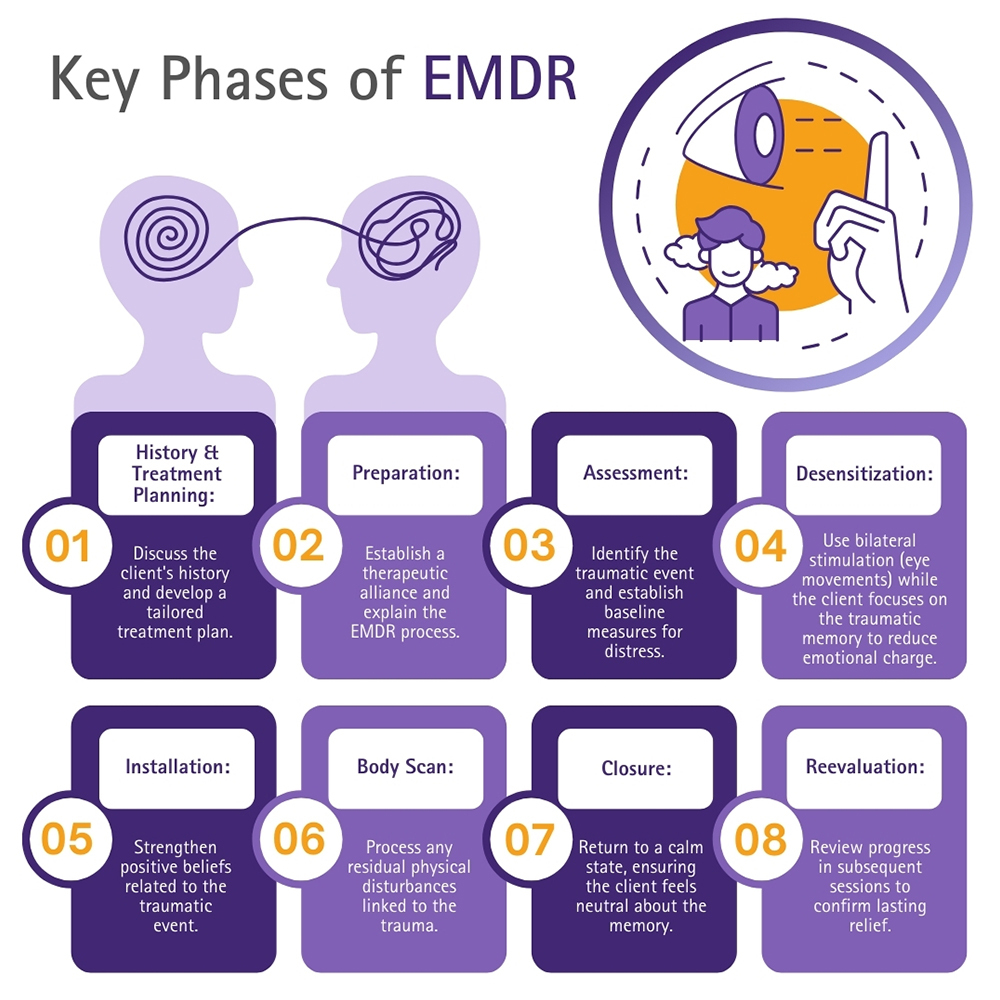
While lots of therapeutic approaches differ in framework and method, the eight phases of EMDR supply a systematic structure that overviews the therapeutic procedure. These phases begin with the history-taking and therapy preparation, where the specialist collects relevant details regarding the client's experiences and establishes a safe atmosphere. The 2nd phase focuses on preparation, outfitting clients with tools to manage psychological distress.
In the 3rd phase, clients recognize certain memories to target. The 4th phase involves desensitization, where clients refine these memories while participating in reciprocal stimulation. The fifth stage emphasizes installation, strengthening positive ideas. The sixth stage addresses body check strategies to identify any kind of residual tension.
The last 2 stages include closure, returning clients to a state of stability, and reevaluation, reviewing the effectiveness of the therapy. This structured method assurances that EMDR treatment is complete, dealing with both the physiological and emotional facets of injury.
Secret Strategies Utilized in EMDR Sessions
In EMDR sessions, specialists make use of details strategies to help with recovery and handling of stressful memories. Key amongst these are bilateral excitement approaches, which engage both hemispheres of the brain, and different memory handling techniques that help clients reframe their experiences. Comprehending these methods is crucial for understanding the effectiveness of EMDR therapy.
Bilateral Excitement Methods
Bilateral stimulation methods are vital strategies used throughout EMDR sessions to assist in the handling of distressing memories. These methods entail engaging both hemispheres of the brain, promoting integration and recovery. Common bilateral stimulation strategies include acoustic cues, such as alternating tones or noises, and tactile stimulation, with making use of handheld tools that create rotating faucets. Visual stimuli, such as the specialist guiding the client's eye motions from side to side, are also extensively made use of. The balanced nature of these techniques helps to turn on the brain's natural handling capacities, allowing customers to recycle traumatic memories in a secure setting. Eventually, reciprocal excitement promotes a feeling of safety and enhances the restorative experience throughout EMDR.
Memory Processing Techniques
Memory handling methods in EMDR sessions are critical for helping customers face and revamp distressing experiences. These strategies focus on facilitating the reprocessing of traumatic memories, enabling clients to integrate and fix adverse feelings connected with them. One trick technique involves the usage of reciprocal excitement, which can consist of acoustic tones or responsive experiences, to improve the mind's details handling capacities. Throughout sessions, customers are led to remember specific memories while at the same time participating in reciprocal excitement, advertising a dual focus on the existing minute and the terrible memory. This method aids in minimizing the emotional charge of the memory, making it less invasive. Eventually, memory handling techniques encourage clients to rebuild their narratives, cultivating healing and durability.
The Function of Bilateral Excitement
Reciprocal excitement is an essential part of EMDR therapy, helping with the processing of stressful memories. Different techniques, such as auditory, responsive, and aesthetic excitement, are employed to engage both hemispheres of the mind. This strategy has actually been shown to boost trauma healing by promoting emotional policy and decreasing distress related to past experiences.
Mechanism of Bilateral Stimulation
The system of reciprocal stimulation plays a necessary role in promoting the processing of stressful memories when people engage in EMDR therapy. This strategy includes rotating excitement, usually through auditory, responsive, or aesthetic means, which triggers both hemispheres of the mind. The balanced nature of reciprocal stimulation is assumed to resemble the mind's all-natural handling mechanisms throughout rapid eye movement, promoting combination of upsetting memories. As clients concentrate on their stressful experiences while simultaneously taking part in this stimulation, they might experience a reduction in psychological cost related to those memories. Subsequently, this process permits the reprocessing of trauma, bring about boosted emotional regulation and a much more flexible perspective on past events.
Types of Excitement Techniques
Various stimulation methods are utilized in EMDR treatment to boost the reprocessing of stressful memories. The primary method is reciprocal stimulation, that includes auditory, visual, and responsive modalities. Acoustic stimulation typically involves rotating noises played with headphones, while visual stimulation can consist of assisted eye movements from side to side. Responsive excitement might make use of handheld devices that create alternating faucets on the customer's hands. Each of these strategies aims to engage both hemispheres of the brain, promoting a more effective processing of traumatic memories. Experts might pick one or a combination of these techniques based on customer preferences and healing goals, guaranteeing an individualized technique to recovery. These techniques are important for advertising a much deeper assimilation of terrible experiences within the therapeutic framework.
Benefits for Injury Recovery
The function of reciprocal stimulation in EMDR therapy considerably contributes to injury recuperation by promoting the handling of stressful memories. This technique entails rotating sensory input, usually through eye activities or acoustic tones, which helps in incorporating stressful experiences. By engaging both hemispheres of the brain, bilateral excitement enhances emotional policy and reduces the strength of distressing memories. Research indicates that clients frequently experience a reduction in anxiousness and a boosted ability to challenge distressing ideas. Furthermore, this method promotes cognitive versatility, permitting people to reframe their experiences in a more adaptive way. Inevitably, the use of bilateral stimulation in EMDR treatment plays an essential function in enabling people to achieve lasting recovery and durability despite injury.
The Science Behind EMDR: How It Works
The specific systems of Eye Movement Desensitization and Reprocessing (EMDR) treatment are still being explored, research suggests that it promotes the handling of distressing memories by incorporating sensory, emotional, and cognitive components. EMDR utilizes reciprocal excitement, normally through guided eye activities, which is thought to resemble the mind's natural handling during rapid eye movement. This stimulation might help customers accessibility and recycle stressful memories, decreasing their emotional charge.
Neuroscientific researches suggest that EMDR might change the way distressing memories are stored in the mind, advertising flexible resolution. The treatment motivates people to confront their memories and associated beliefs, enabling them this article to reframe their experiences. Additionally, the structured phases of EMDR-- such as desensitization, history-taking, and installation-- sustain a detailed exploration of the injury, promoting combination of the fragmented aspects of the memory. This process eventually intends to bring back a sense of stability and psychological well-being.
Advantages of EMDR for Trauma Healing
EMDR treatment provides countless advantages for people recovering from trauma, specifically by dealing with the emotional and cognitive distortions connected with terrible experiences. One significant advantage is its capacity to promote fast handling of distressing memories, typically resulting in a reduction in symptoms such as anxiety and depression. This method enables clients to confront their trauma in a organized and risk-free environment, fostering resilience and psychological law.
Additionally, EMDR helps individuals reframe negative beliefs connected to their trauma, promoting a healthier self-image and recovering a sense of control. The therapy can improve general mental health and equip clients to regain their lives, making it a valuable device in injury healing. EMDR is appropriate for numerous age groups and can be adjusted to satisfy the details demands of people, making it a flexible option for those seeking to recover from their distressing experiences efficiently.
Who Can Gain From EMDR Therapy?
Individuals from varied backgrounds and experiences can gain news from EMDR treatment, particularly those who have actually experienced trauma in different kinds. This consists of survivors of youth misuse, all-natural calamities, accidents, and fight experiences. Furthermore, individuals suffering from trauma (PTSD) usually locate EMDR to be an effective treatment choice.
Beyond trauma, those dealing with stress and anxiety, clinical depression, anxieties, and other mental health problems may also experience renovations with EMDR. The therapy can assist in settling upsetting memories that add to these concerns.
Furthermore, EMDR is not limited to grownups; teens and youngsters can additionally benefit, particularly when adapted to their developmental demands. Overall, EMDR therapy offers a flexible method, making it suitable for a variety of individuals seeking recovery from emotional discomfort and mental distress. Its structured yet flexible nature enables specialists to tailor the treatment to satisfy details client demands.
Often Asked Questions
How much time Does an EMDR Therapy Session Usually Last?
Is EMDR Treatment Suitable for Children?
EMDR therapy can be appropriate for children, as it has been adjusted to resolve their unique developmental requirements. Appropriately educated specialists can successfully apply techniques that help youngsters process terrible experiences in a supportive atmosphere.
What Should I Expect After an EMDR Session?
After an EMDR session, individuals might experience emotional launch, short-term exhaustion, or increased feelings. Some report improved quality and relief, while others could want for added processing time to incorporate their experiences properly.
Exist Any Negative Effects of EMDR Therapy?
How Do I Find a Qualified EMDR Specialist?
To discover a certified EMDR specialist, individuals ought to seek recommendations from health care companies, validate qualifications through professional companies, and seek advice from on the internet directories. Making sure proper training and experience in EMDR is essential for effective treatment.
Reciprocal excitement is a basic part of EMDR treatment, promoting the handling of distressing memories. When individuals engage in EMDR therapy, the mechanism of bilateral excitement plays a necessary function in helping with the processing of terrible memories. Various stimulation methods are used in EMDR treatment to improve the reprocessing of stressful memories. The duty of bilateral excitement in EMDR therapy substantially contributes to injury healing by facilitating the handling of upsetting memories. The precise systems of Eye Motion Desensitization and Reprocessing (EMDR) treatment are still being discovered, research suggests that it assists in the processing of terrible memories by integrating sensory, psychological, and cognitive parts.